HomeParking lots
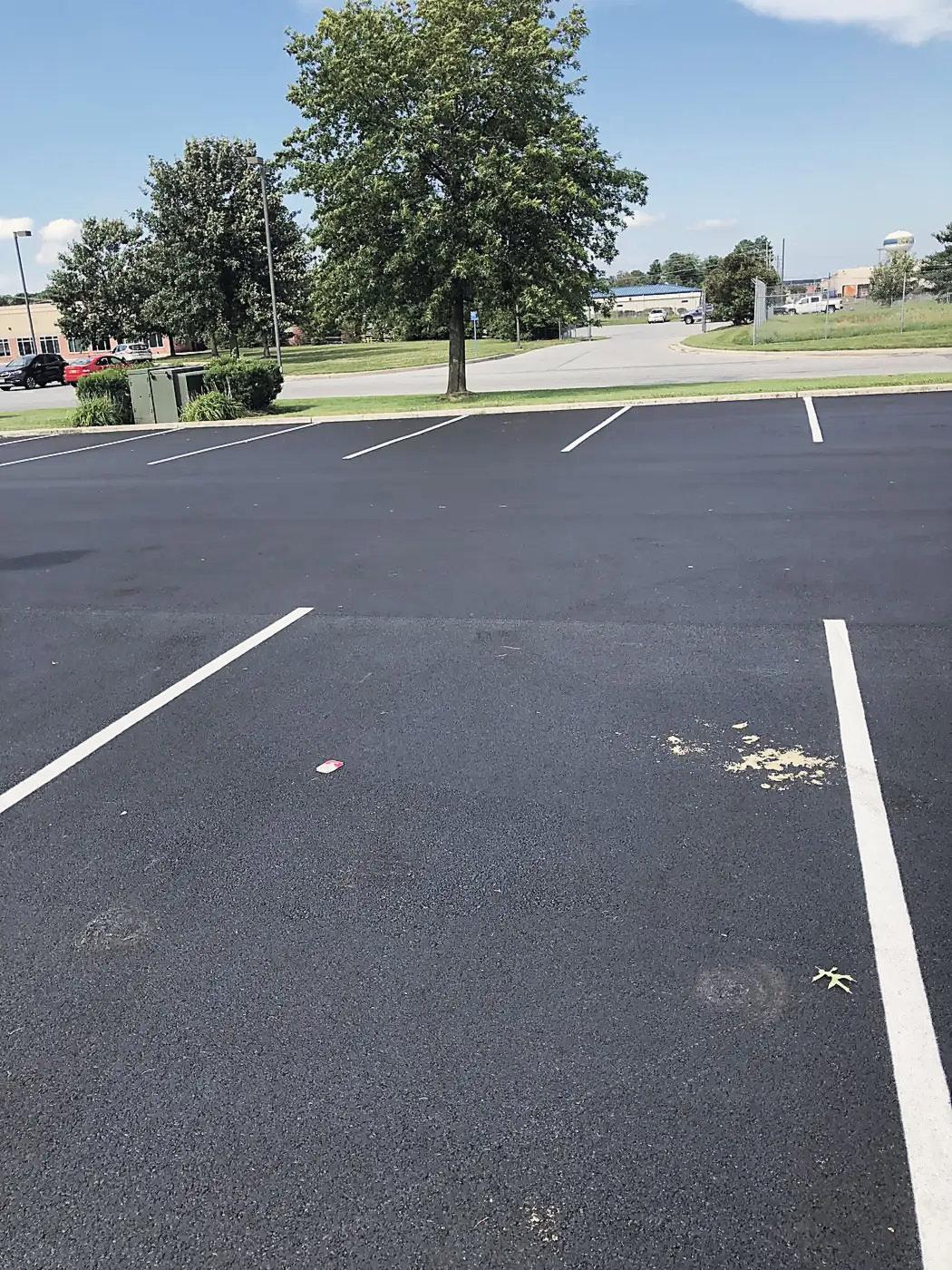
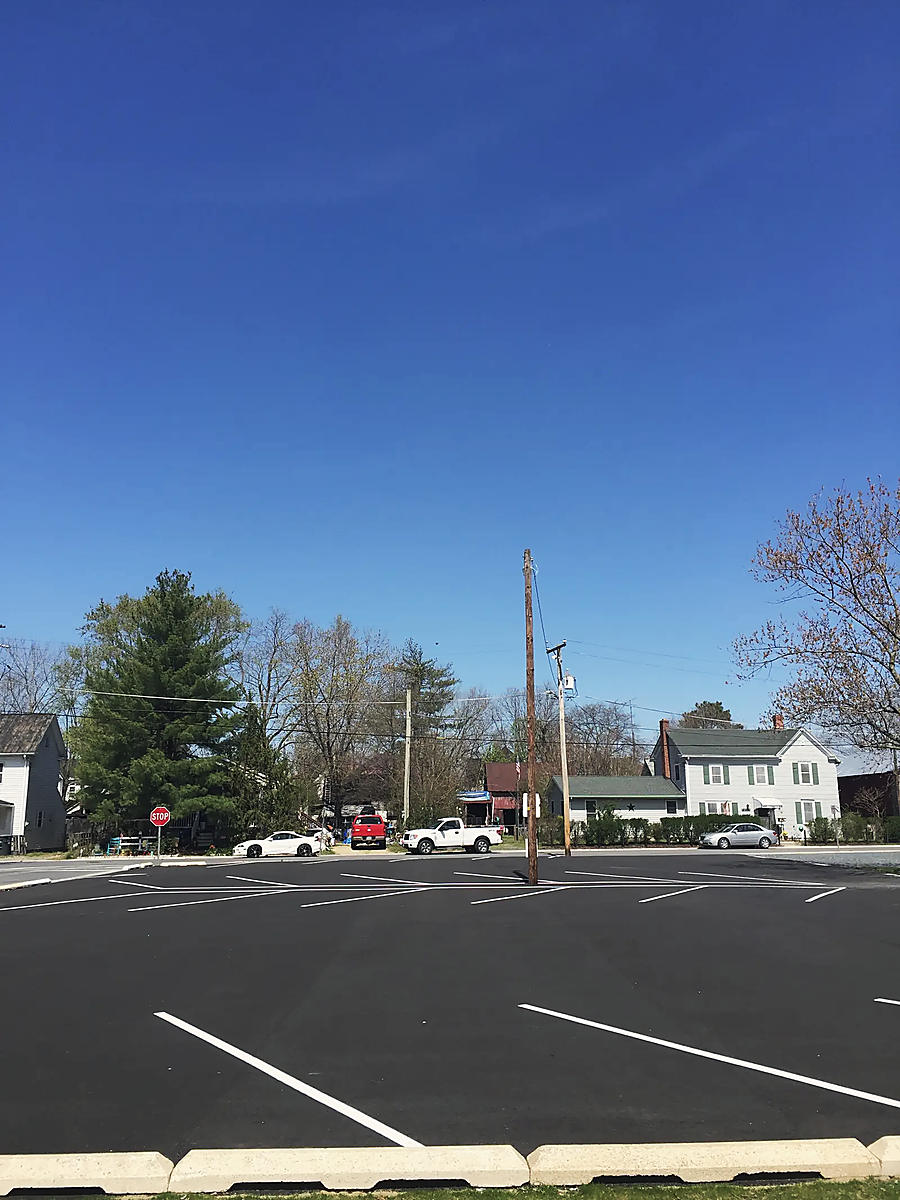
Parking lot paving · Eastern Shore, MDParking lots, paved and striped.
Parking lot paving on Maryland's Eastern Shore for churches, stores, apartment communities and mobile home parks, phased so the property stays open.
Built for trucks, not just cars.
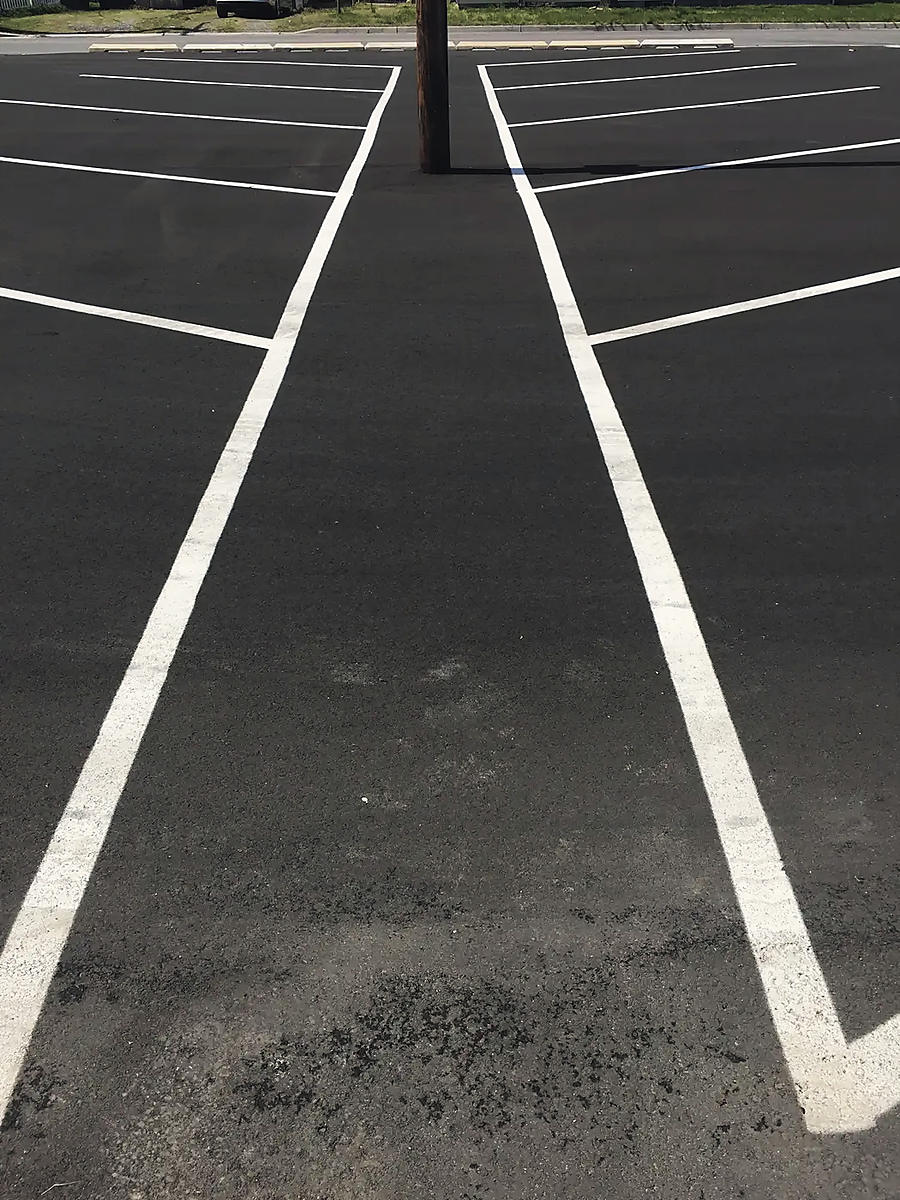
A deeper base, a heavier surface, and drainage worked out before the paver shows up. Then the lines: bays, arrows and accessible spaces.
- New lots and full replacements
- Sealcoating and restriping
- Patching and repair
- Snow removal
Striping: lines that make the lot work.
Faded lines cost parking. Drivers spread out, the aisle gets tight, and the corner that held two cars now holds one. Parking lot striping puts those spaces back, on lots Bob paved and lots he has never touched.
On a re-stripe the crew usually follows the layout that is already there, since your customers know it. A new lot or a redesign starts with a tape measure and a chalk line: stalls about nine feet wide and eighteen deep, an aisle wide enough to back out in one move, wider where trucks turn. The whole layout is chalked and walked with you before any paint goes down. Arrows, stop bars, numbered stalls, no parking hatching, loading zones and fire lanes go down on the same visit.
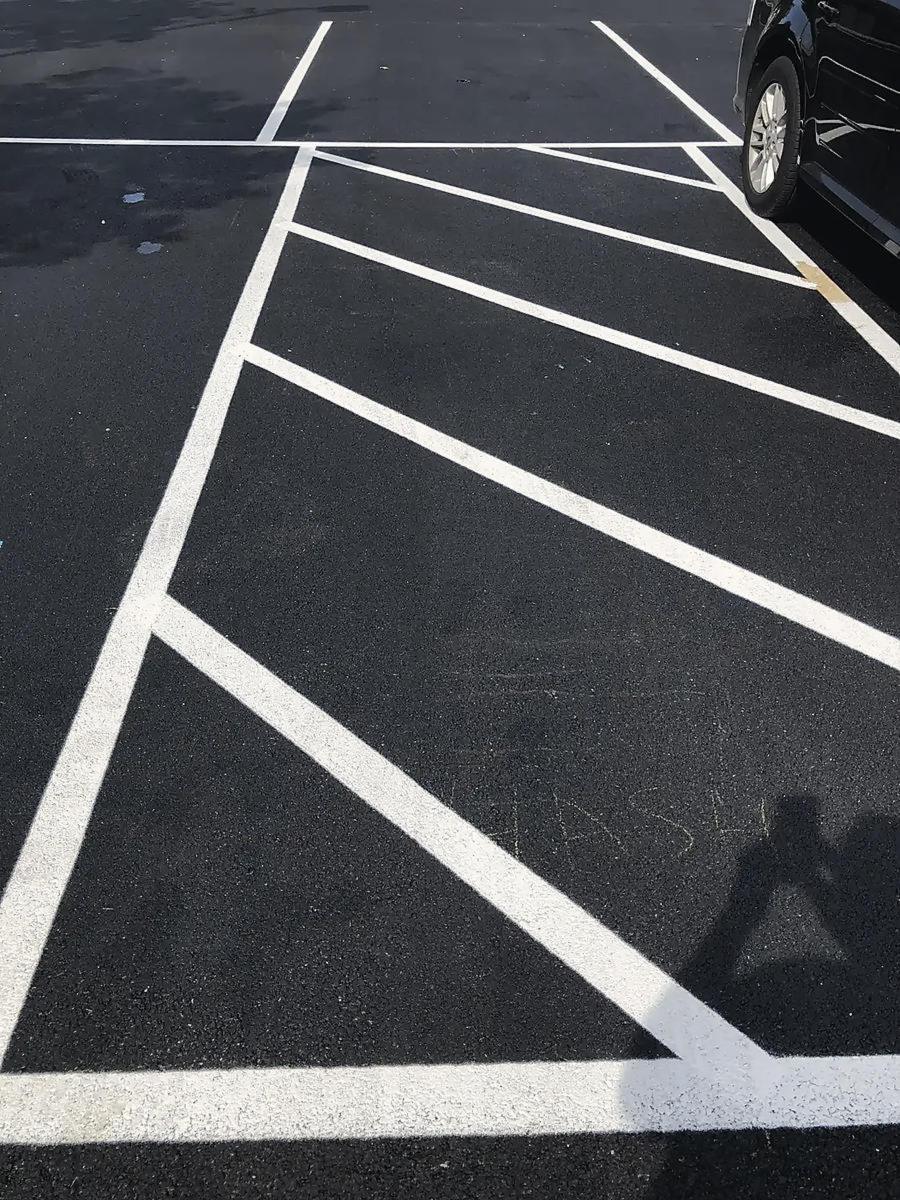
Any lot open to the public needs accessible stalls, more of them as the lot grows, each with a marked access aisle beside it, and van accessible stalls with a wider aisle and a sign. They are laid out to the federal standard published at ADA.gov, on the shortest route to the door.
Seal first, then paint.
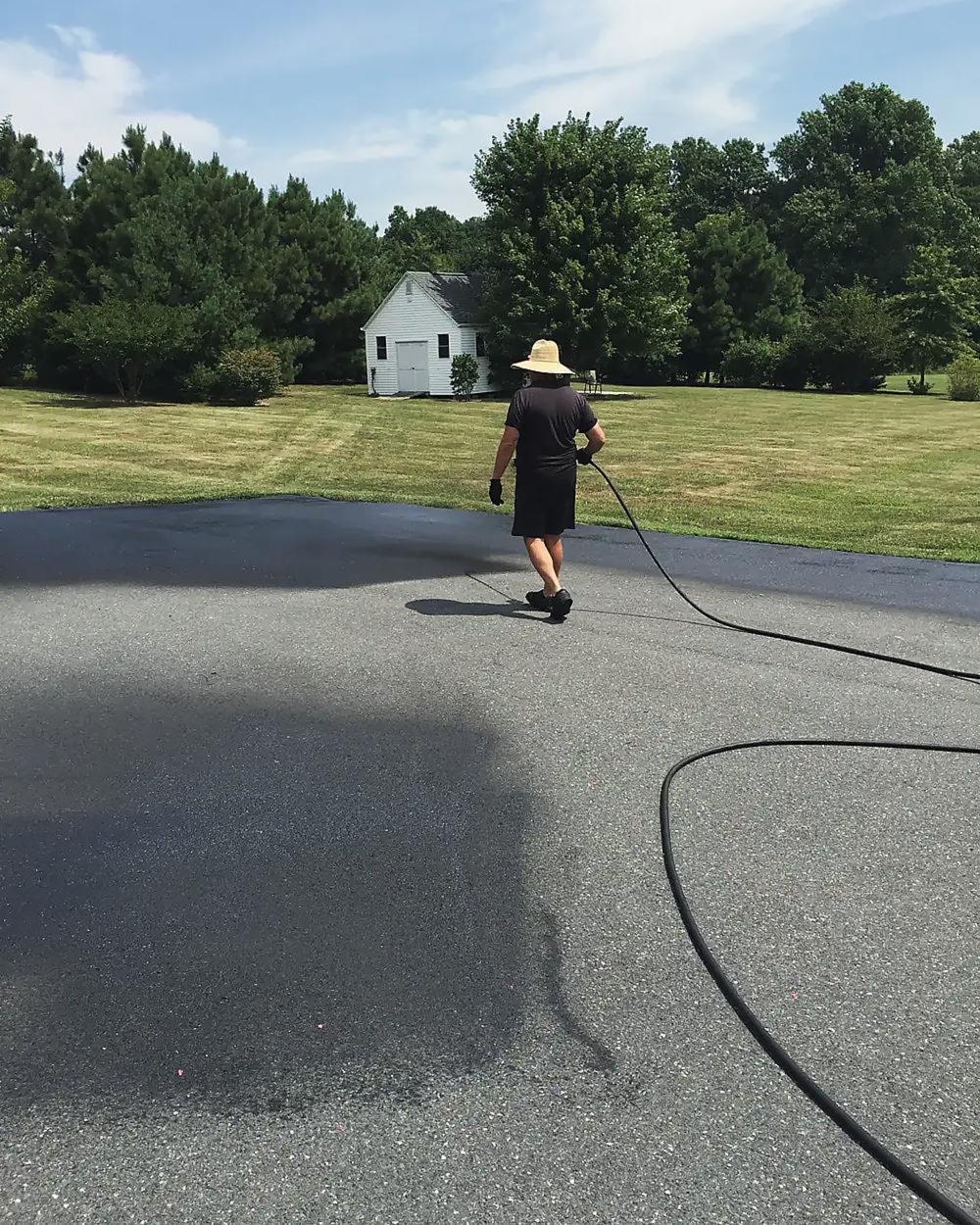
A tired lot gets its holes and soft spots fixed first, then the seal, then the lines, because sealer covers the whole surface and would bury fresh paint. Paint lasts far longer on a sealed surface than a raw one, so most lots are sealed and striped on one visit, and a busy lot that takes trucks and turning traffic usually wants sealcoating every year or two.
New asphalt needs time to cure before it takes paint, so a brand new lot gets its permanent lines once the surface is ready, and a temporary layout first if the business has to open sooner. Re-stripes are simpler: the lot is swept and blown, anything that moved is chalked, and the paint goes on a dry day.
Questions owners ask first.
Can the business stay open while you pave?
Yes. Commercial work is phased section by section so customers can still park, and the schedule is planned around your hours.
Do you stripe the lot too?
Yes: parking bays, angled bays, arrows, no-parking legends and accessible spaces with their aisles.
Is a parking lot built differently from a driveway?
A lot that takes delivery trucks needs a deeper stone base and a heavier surface than a driveway, so it is quoted that way.
Do you sealcoat existing lots?
Yes. Sealing a sound lot every few years keeps water out of the cracks, and it is usually restriped after.
How long does striping take to dry?
Traffic paint is usually dry to walk on within an hour and ready for cars in a few hours, depending on heat and humidity. Sections are coned off so part of the lot keeps working while the rest dries.
How long do parking lot lines last?
On a normal business lot, one to two years before they start to fade, sooner in the drive aisles and at the entrance where tires scrub. Fresh asphalt gets two coats of paint, because new pavement drinks the first one.
How many accessible stalls does my lot need?
It depends on the total number of stalls, and the federal standard sets it on a sliding scale. The lot is counted, then the accessible stalls, access aisles and signs are laid out to match.
Do you work on small church and business lots?
Yes, plenty of them. A small lot is often a single morning, usually on a weekday when the property is quiet.
Do you fix potholes and soft spots before sealing?
Yes. Holes and soft spots are cut out and patched first, then the lot is sealed, then striped. Sealer and paint over a failing spot only hide it for a season.
Robert and Son PavingFree estimates · Bob calls you back