HomeTar and chip
Tar and chip paving · Eastern ShoreStone on top, locked in place.
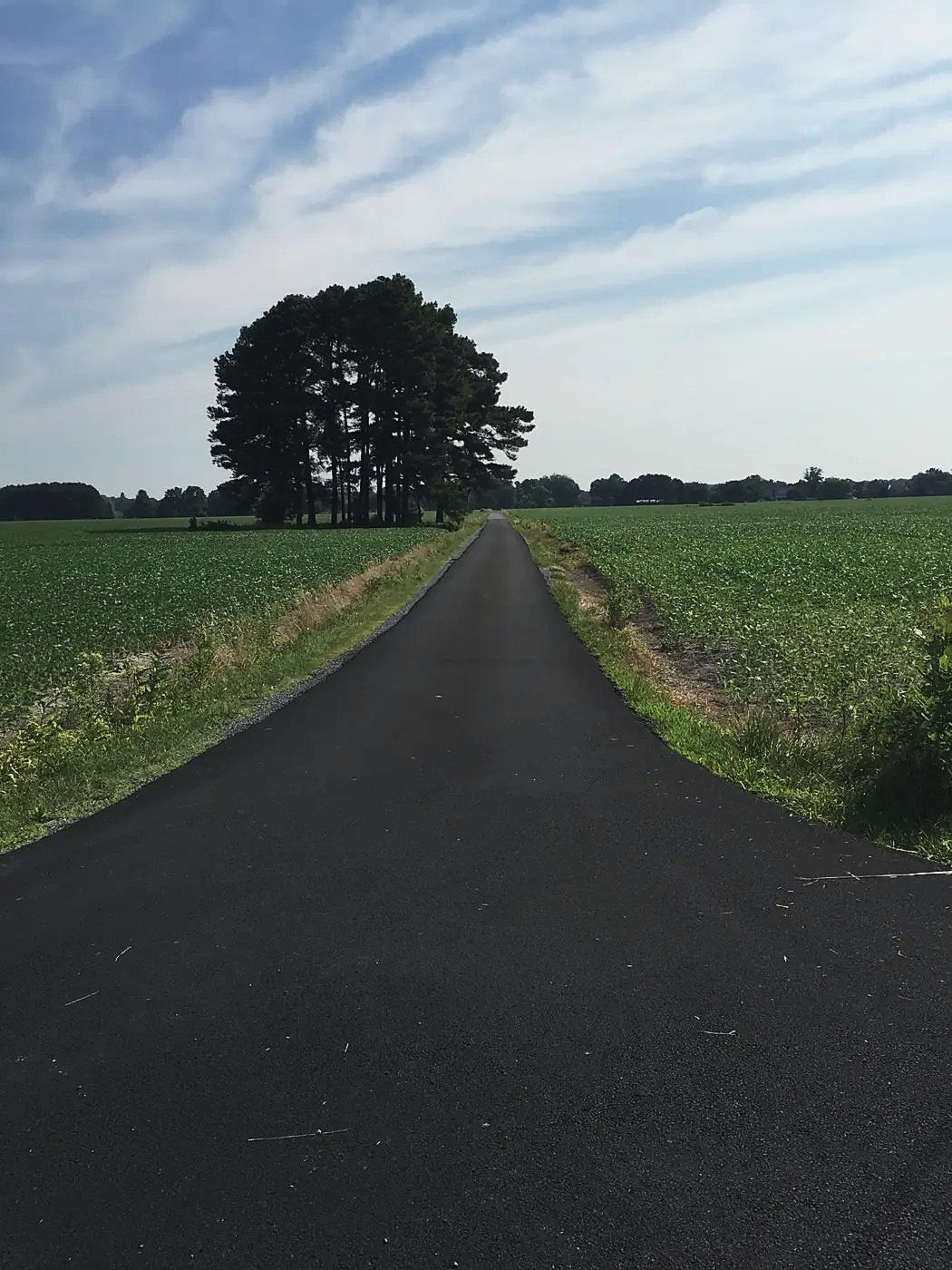
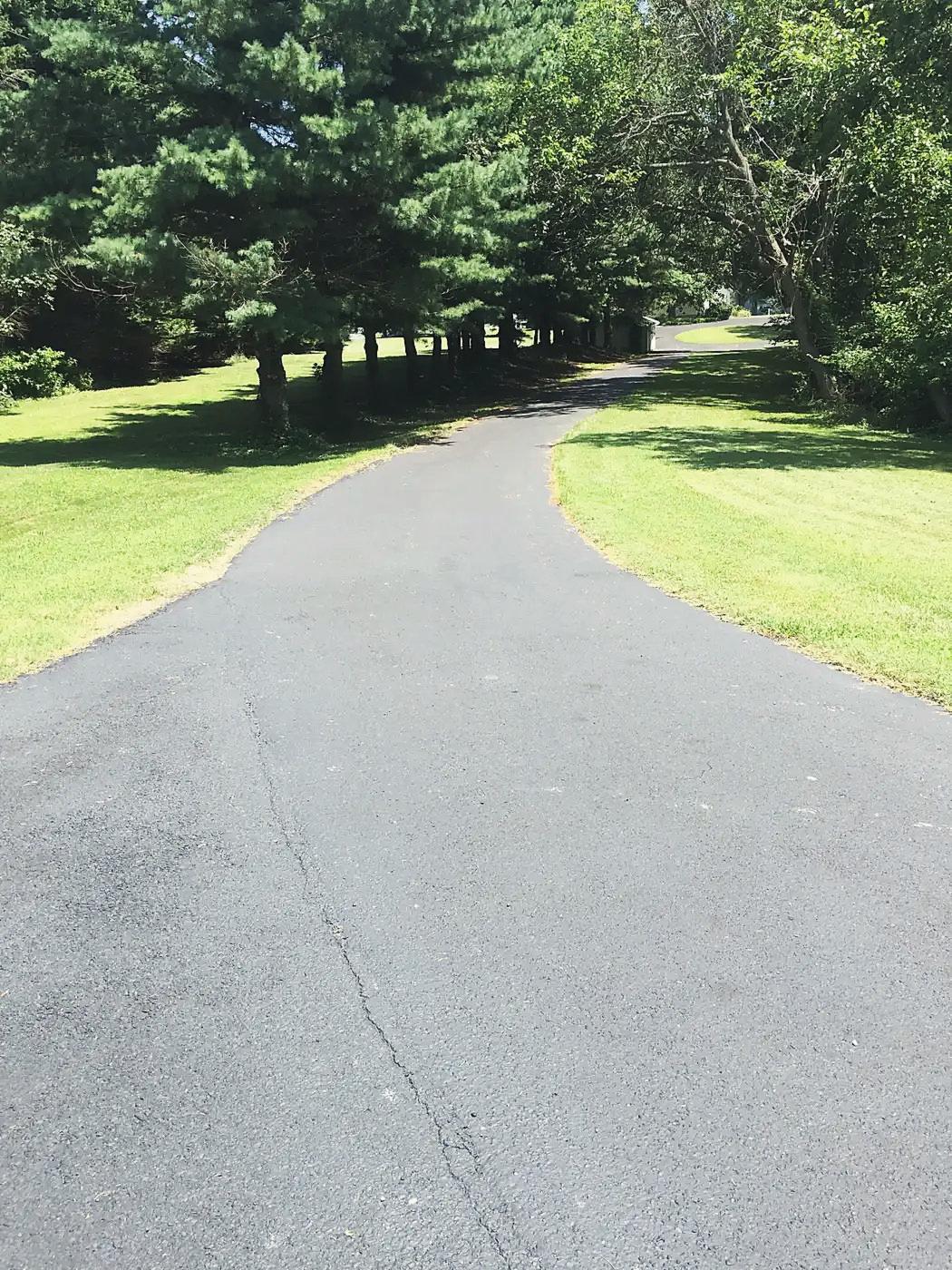
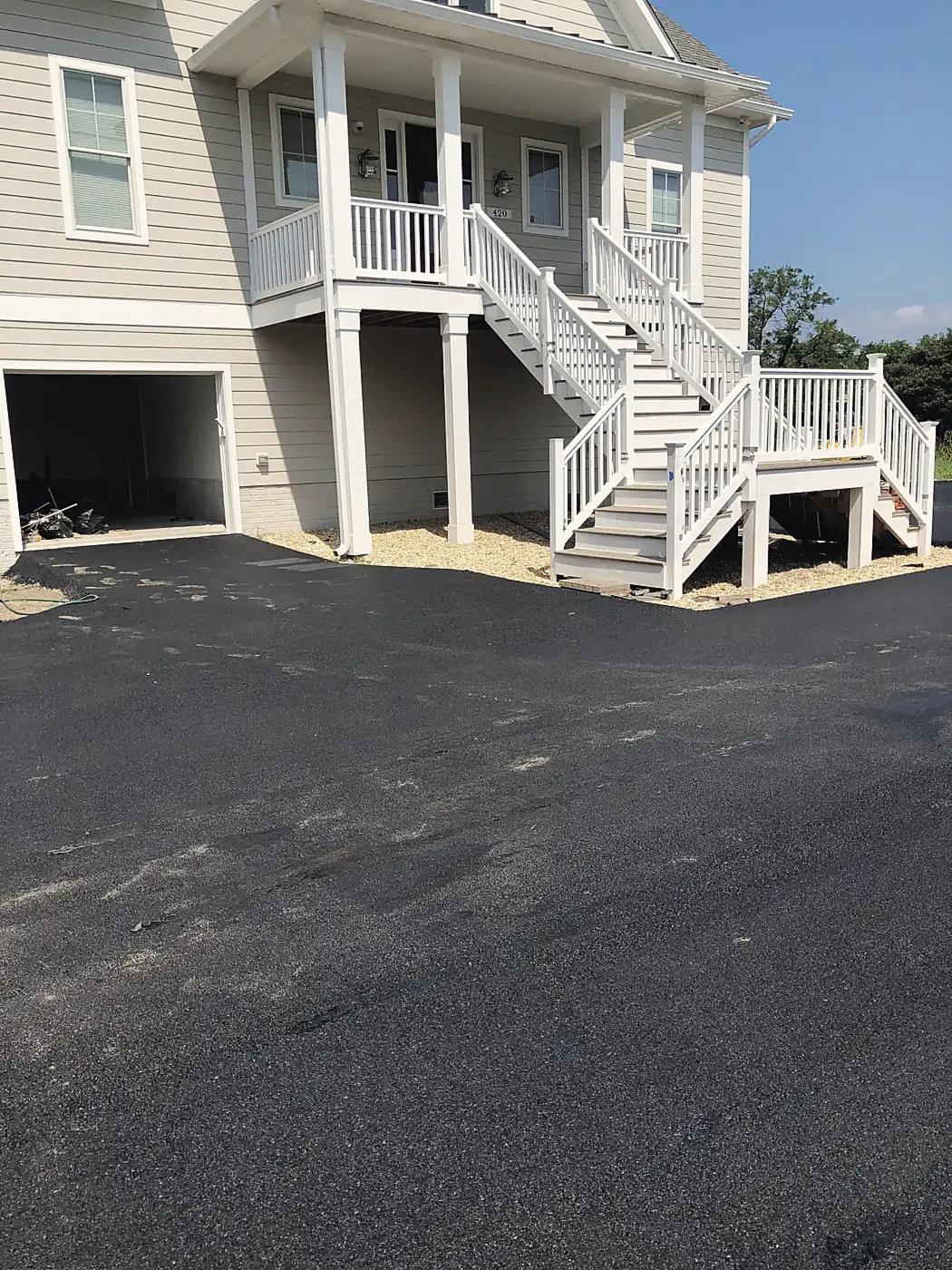
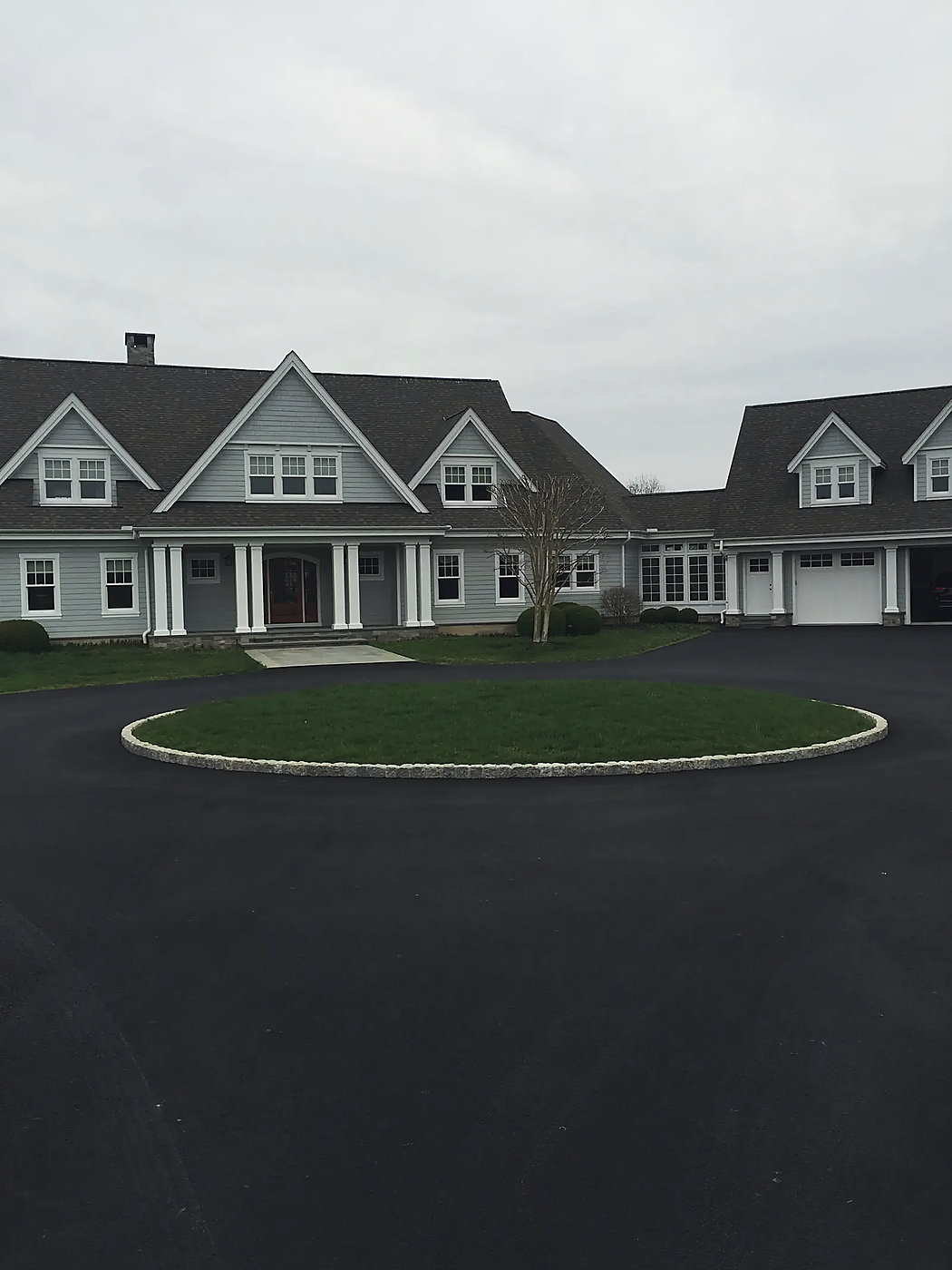
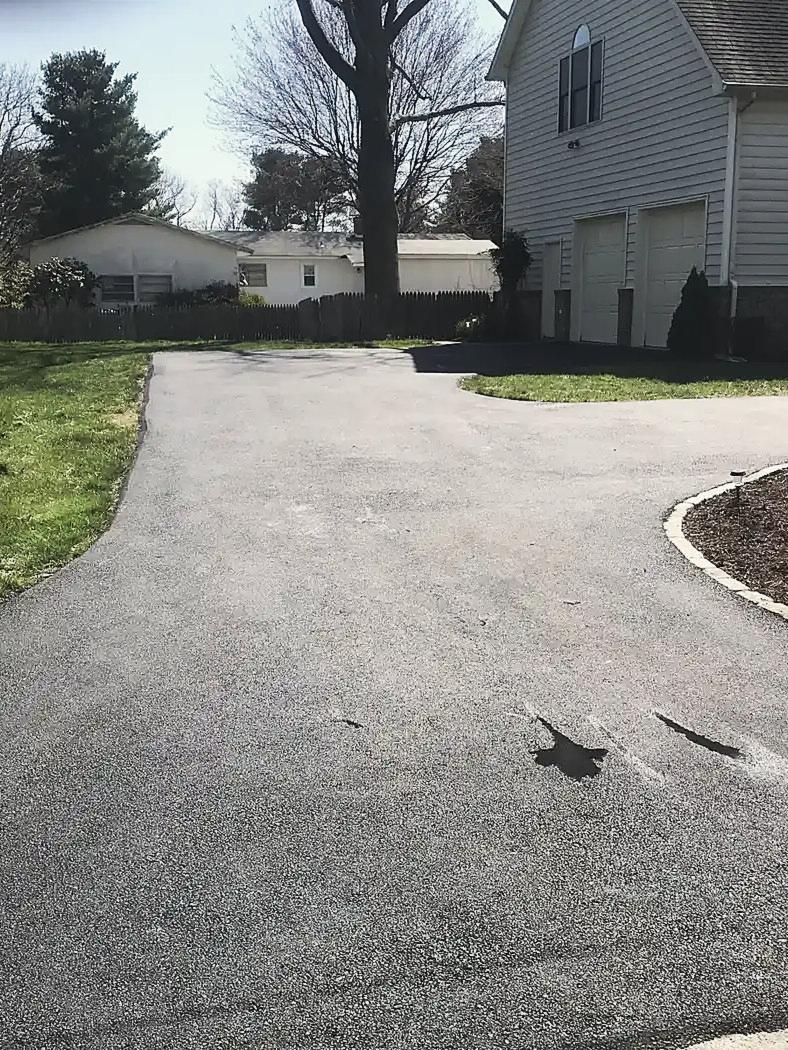
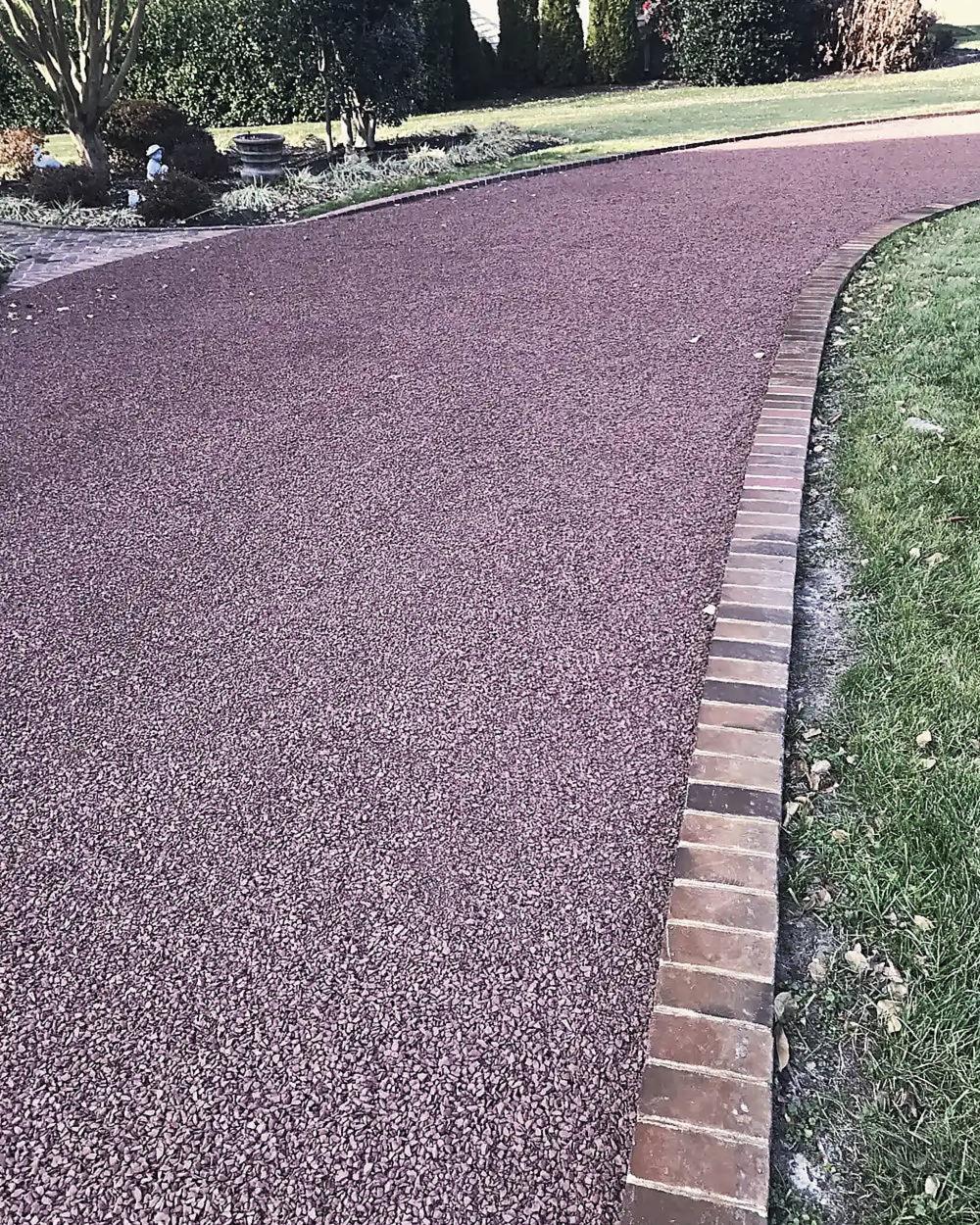
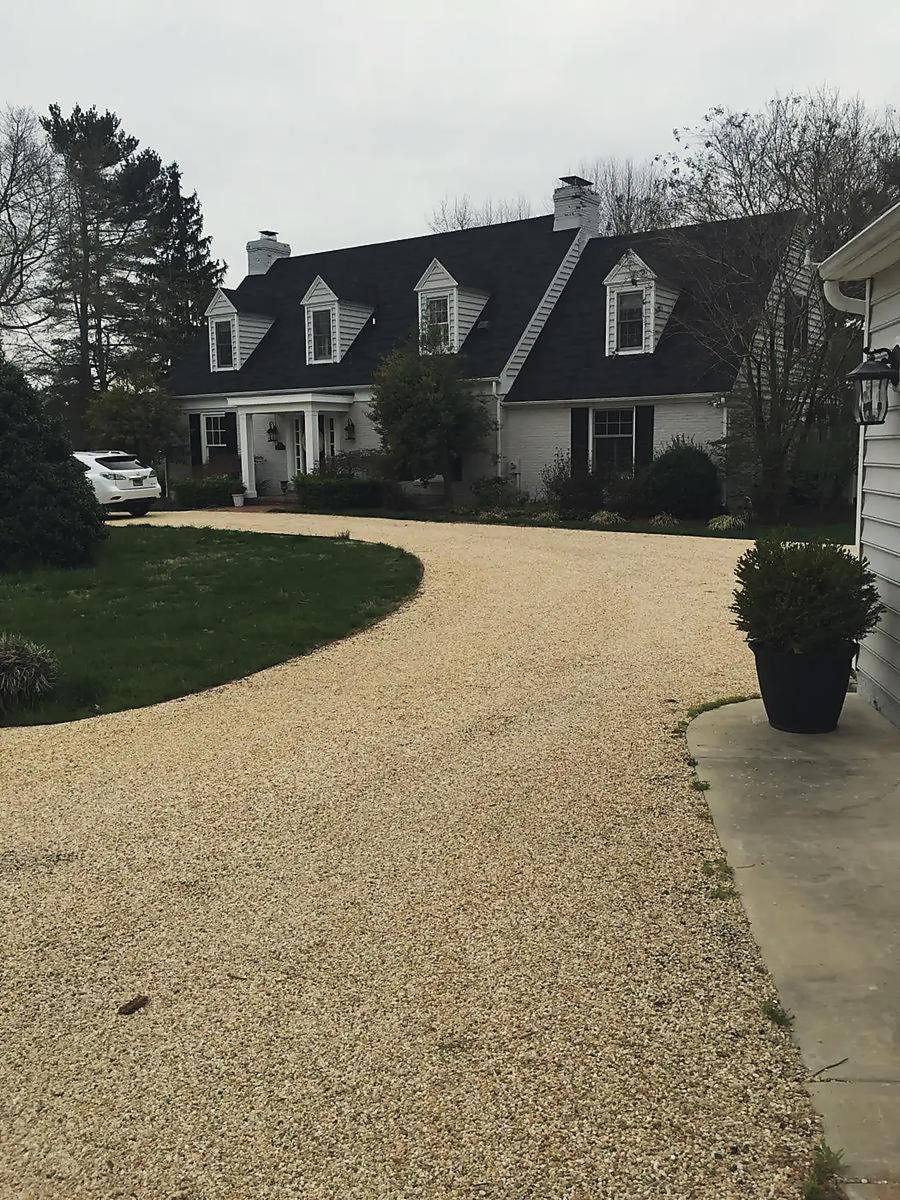
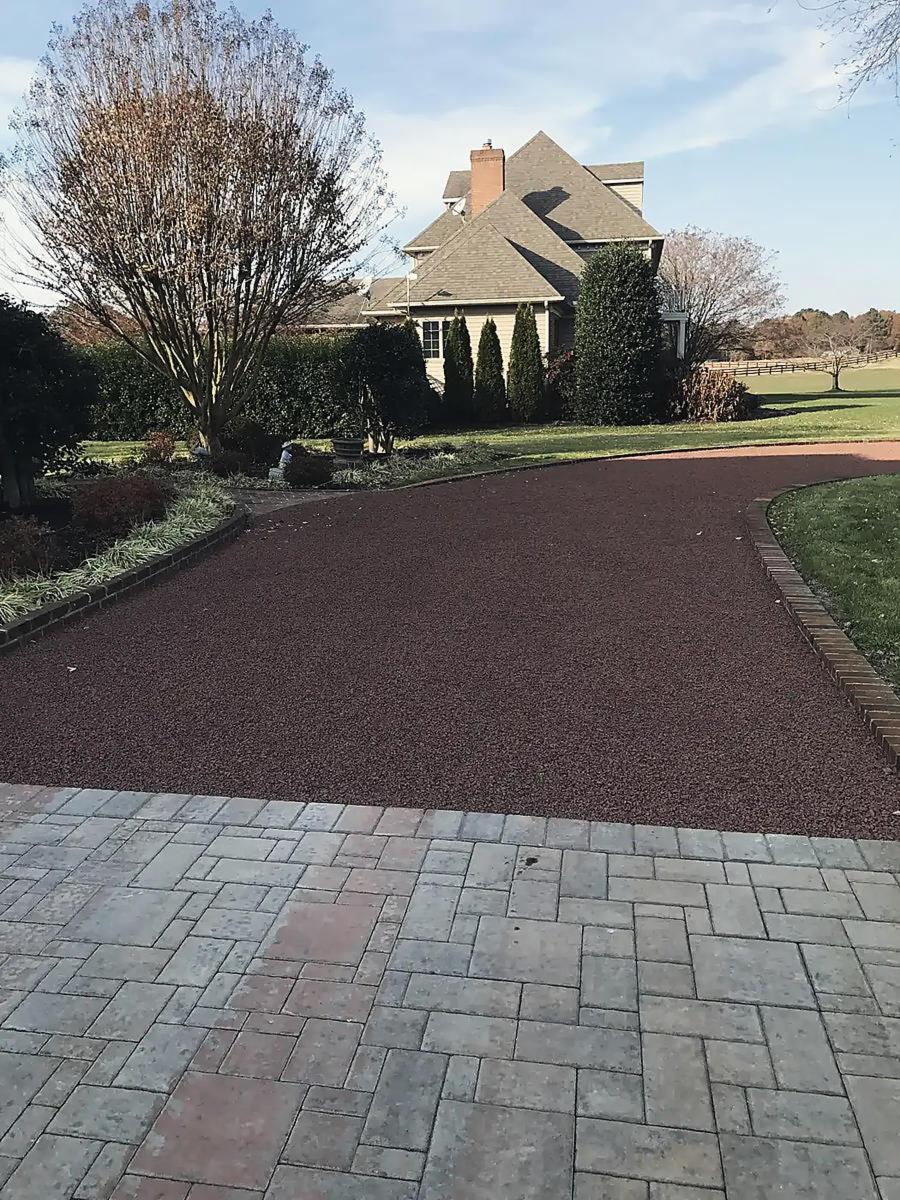
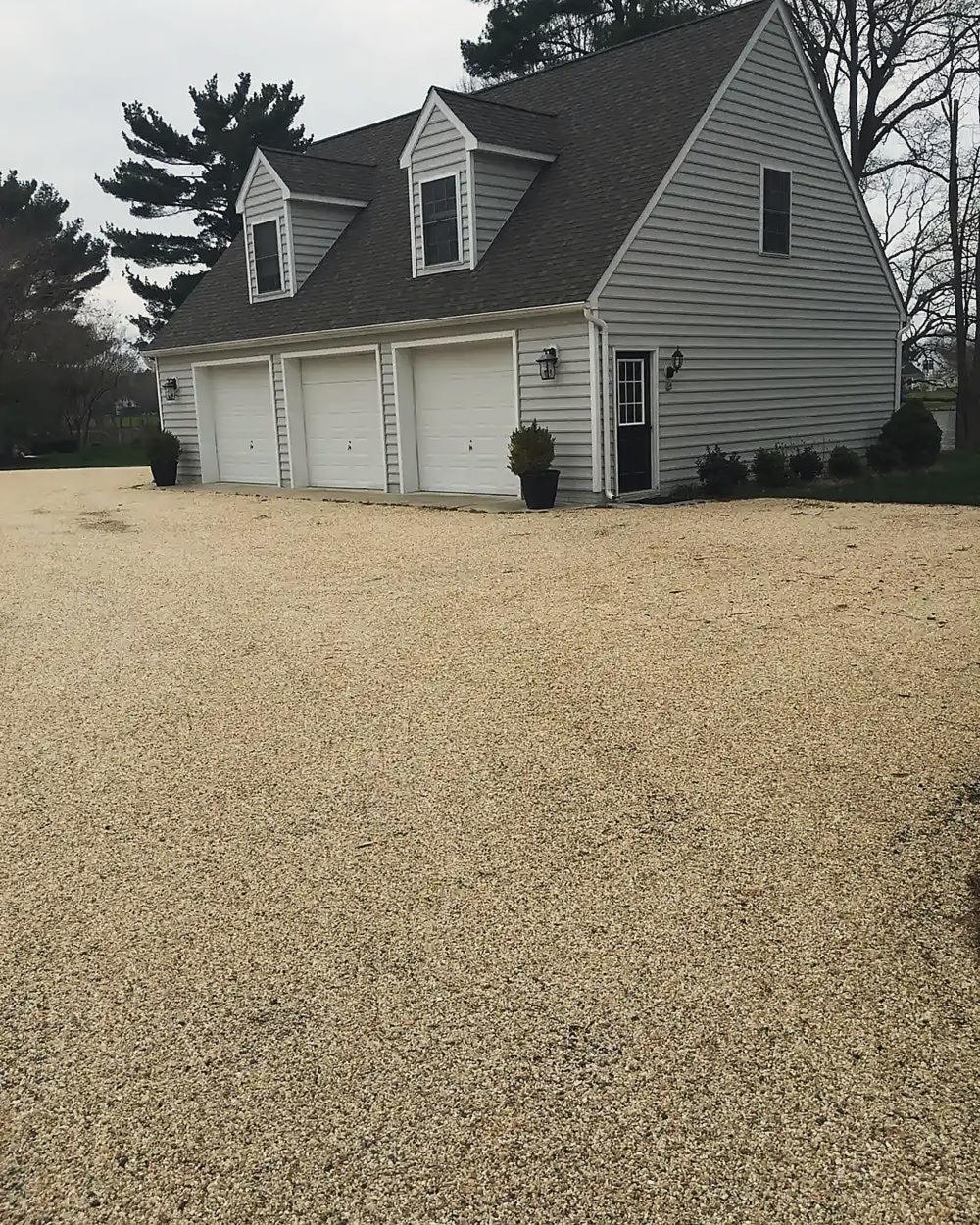
Tar and chip paving, also called chip seal, gives an Eastern Shore country drive the look and grip of stone without the ruts, the washouts or the raking every spring.
Laid in two steps, while it is hot.
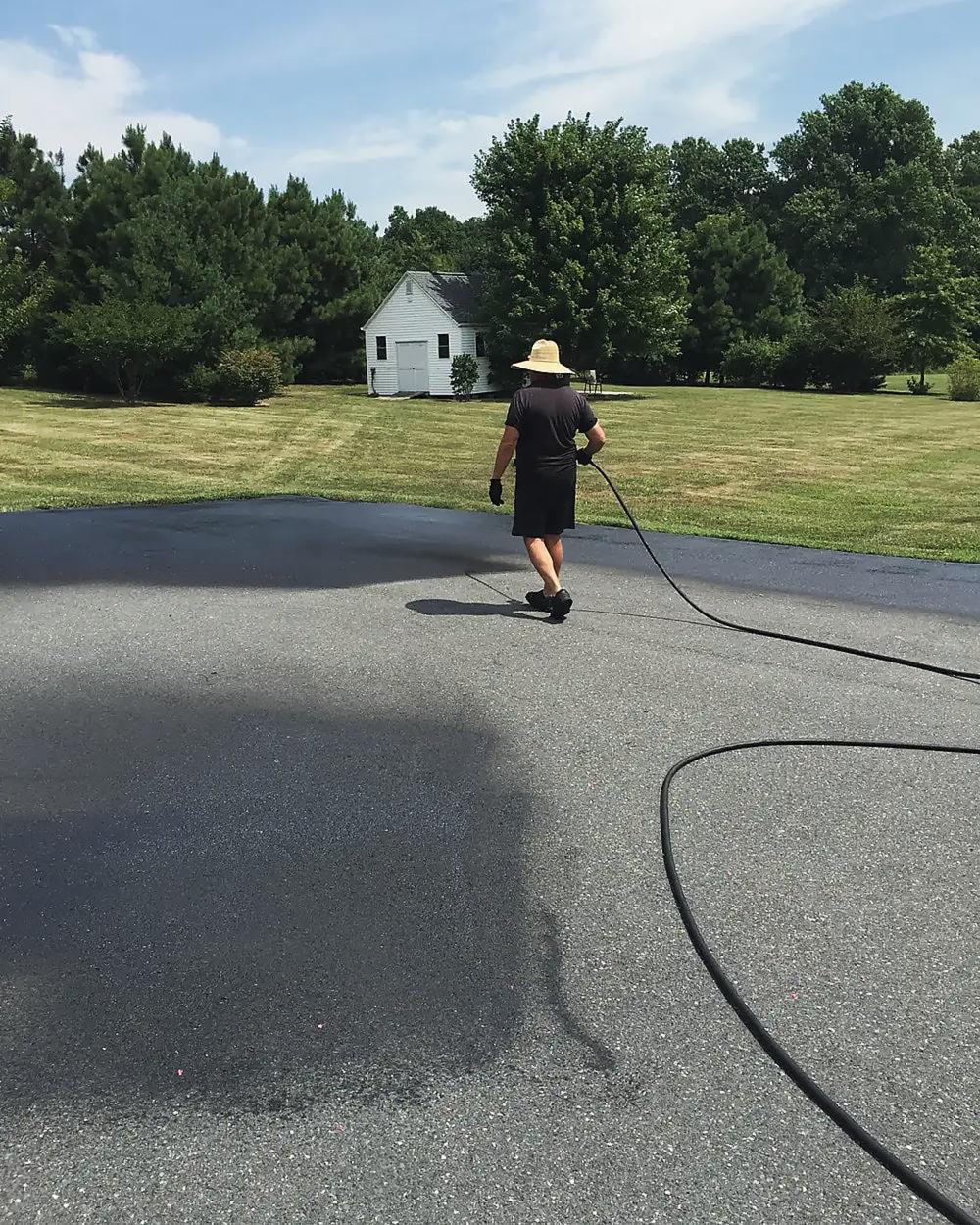
The base comes first, the same as any paving job: compacted stone or a sound existing surface, shaped to drain, with no soft spots, because tar and chip is a thin skin that copies whatever is under it. Then hot liquid asphalt goes down even across the full width, clean stone follows straight away before the asphalt starts to set, and the roller presses each chip in so it is held instead of sitting loose on top. Timing is the whole job.
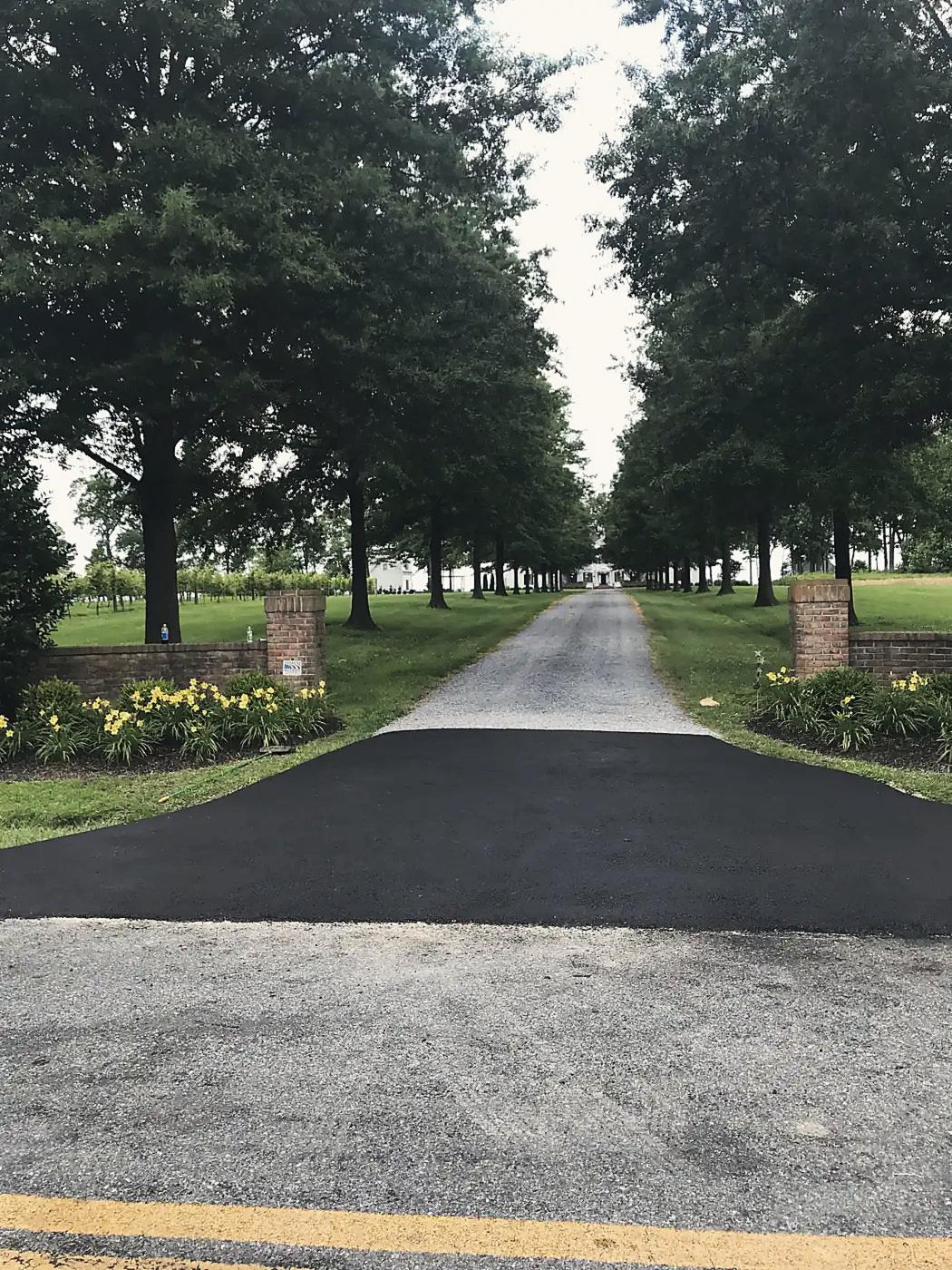
- Country homes and farmhouses
- Long lanes where a wide black drive looks out of place
- Beside brick and paver borders
Tar and chip or asphalt?
It comes down to look, budget and traffic. Tar and chip usually costs less than hot mix on the same area, needs no sealing, and hides tire marks and patches because the surface is already textured. On a long lane that difference adds up quickly.
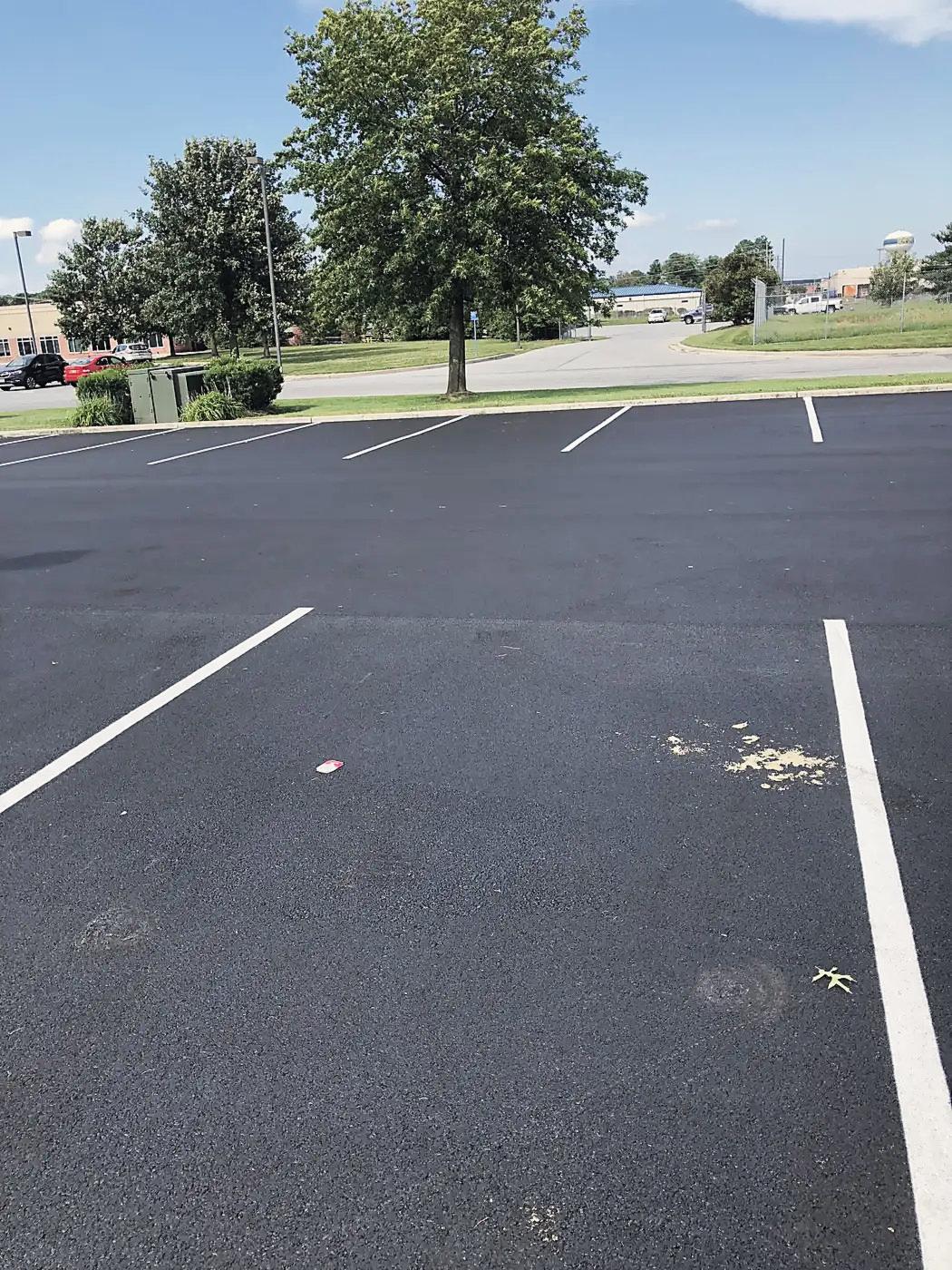
Hot mix wins where the surface has to be smooth and tight: short town driveways, anywhere you shovel snow often, spots where trucks turn hard, and any lot that has to be striped. If that is your drive, asphalt driveway paving is the better fit, and Bob will tell you so.
Tar and chip can also go over a sound stone drive as the step up from loose gravel, or over a solid old asphalt surface that still drains. Where a lane needs shaping first, it is cut back to a proper profile before anything is sprayed.
Looking after it for years.
Expect several years of good service before it wants a fresh chip coat, and that refresh is simple because the base is already there. Loose stone sweeps to the edges in the first couple of weeks. Drive at a sensible speed for the first few days and do not turn the wheel while the car is standing still. In winter, keep the plow blade up a touch or fit skid shoes.
Not every paving outfit still runs tar and chip, because it is a timing job. Robert and Son has laid it out of Federalsburg for decades, on driveways and lanes across Caroline, Dorchester, Talbot and Queen Anne's counties, under MHIC #74385, with a two year warranty and free estimates.
Tar and chip questions, answered straight.
What colors does tar and chip come in?
The stone decides the color. Red and tan are the usual choices around here, and each one changes the look of the whole property. You see the stone before you commit to it.
Can tar and chip go over my existing driveway?
Often, yes, if the surface is sound and drains. A solid old asphalt drive or a well compacted stone base both work. What it cannot do is bridge a failed base or a low spot that holds water, because the chip coat is thin and follows the shape below it.
Does loose stone come off a tar and chip driveway?
Some stone always works loose in the first week or two, which is normal, and it sweeps to the edges as traffic settles the surface. After that the chips stay put in the asphalt, unlike gravel that keeps moving all year.
Can you plow snow off tar and chip?
Yes, with a little care. Keep the blade slightly up or fit skid shoes so it rides over the surface. A plow set hard down pulls chips loose, the same way it scars any thin surface.
Does tar and chip need sealing?
No. The stone is the wearing surface, so there is nothing to seal. When it eventually looks thin, the fix is another chip coat over the top, a quick job on a base that is already built.
Do you lay tar and chip outside Federalsburg?
Yes. Preston, Sudlersville, Denton, Hurlock, Trappe, Easton and Cambridge are regular stops, along with the rest of Caroline, Dorchester, Talbot and Queen Anne's counties and Sussex County in Delaware.
Robert and Son PavingFree estimates · Bob calls you back